01
It sells
The funnel is built into the structure, not bolted on after launch. The first screen starts the conversation.

Custom design, conversion journeys, SEO foundations and analytics. Built together, from a focused landing page to the platform your business runs on.
Landing pages to custom platformsThe four promises hold at every scope. Only the depth changes.
The funnel is built into the structure, not bolted on after launch. The first screen starts the conversation.
A request creates a CRM record, alerts the right owner and starts the process your team already runs.
Search intent shapes the architecture from the first sitemap, rather than being retrofitted later.
The stack and data model are chosen for where the business is going. Growth adds pages, not a rebuild.
| What it can be | The scope |
|---|---|
| Landing page | One offer and a focused conversion path — a campaign, a booking flow or a single service. |
| Corporate website | Services, markets, content and several audiences that must not compete with each other. |
| E-commerce | Catalogue, checkout, payments, orders, inventory and fulfilment, connected to how you sell. |
| Custom platform | User accounts, dashboards, permissions and the business logic your workflows depend on. |
Four businesses, four markets, one pattern: the first screen already starts the process the sales team has to finish.

The hero leads with measurable outcomes, not a list of services. Custom graphics and interactive components built for this brand alone. Bilingual content model with one consultation path on every service page.
B2B IT services & infrastructure support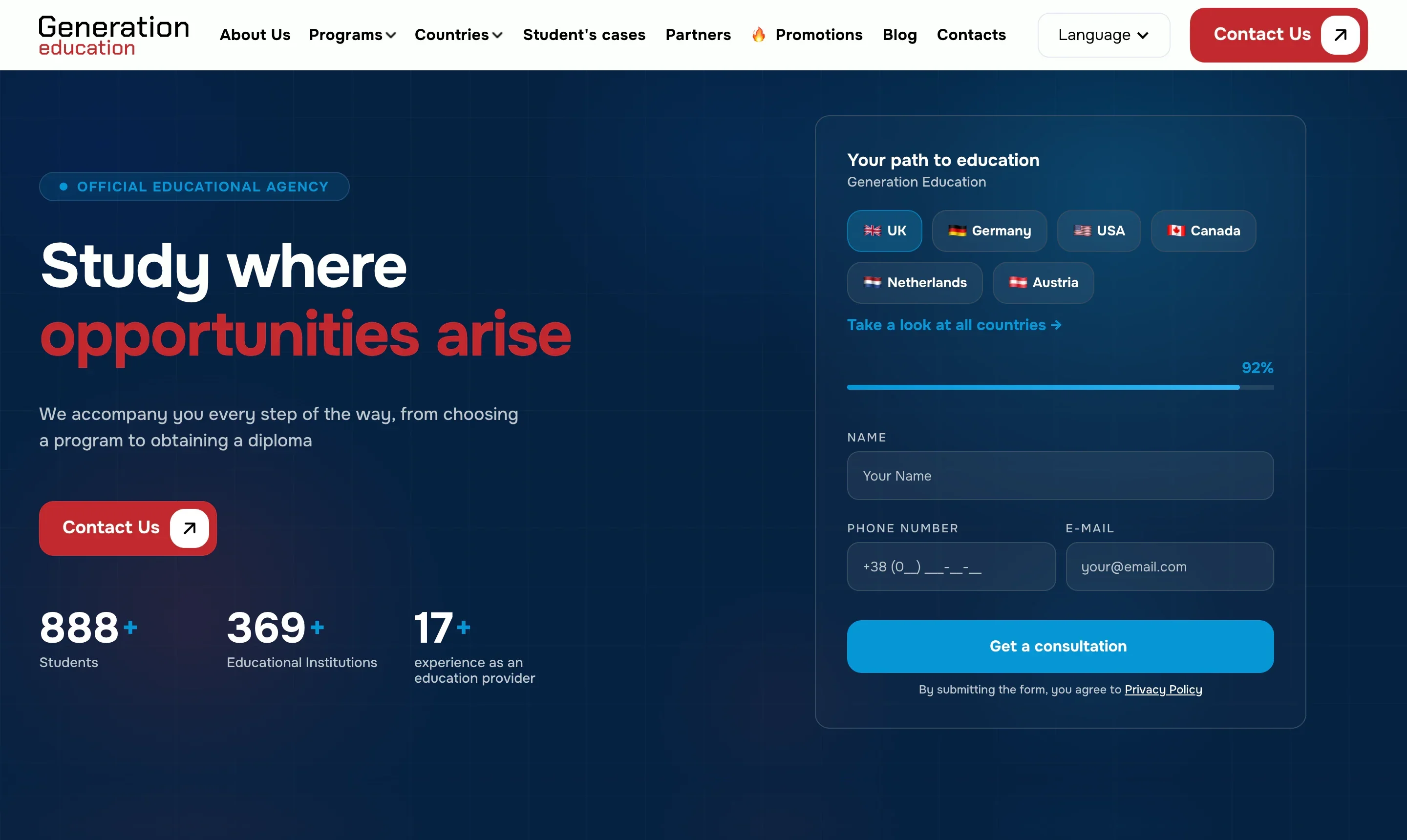
A qualification quiz in the hero: country first, contact details last. Answers arrive with the enquiry, so the consultant opens a brief, not a blank name. Programmes, countries and partners managed in the CMS without a developer.
international education consultancy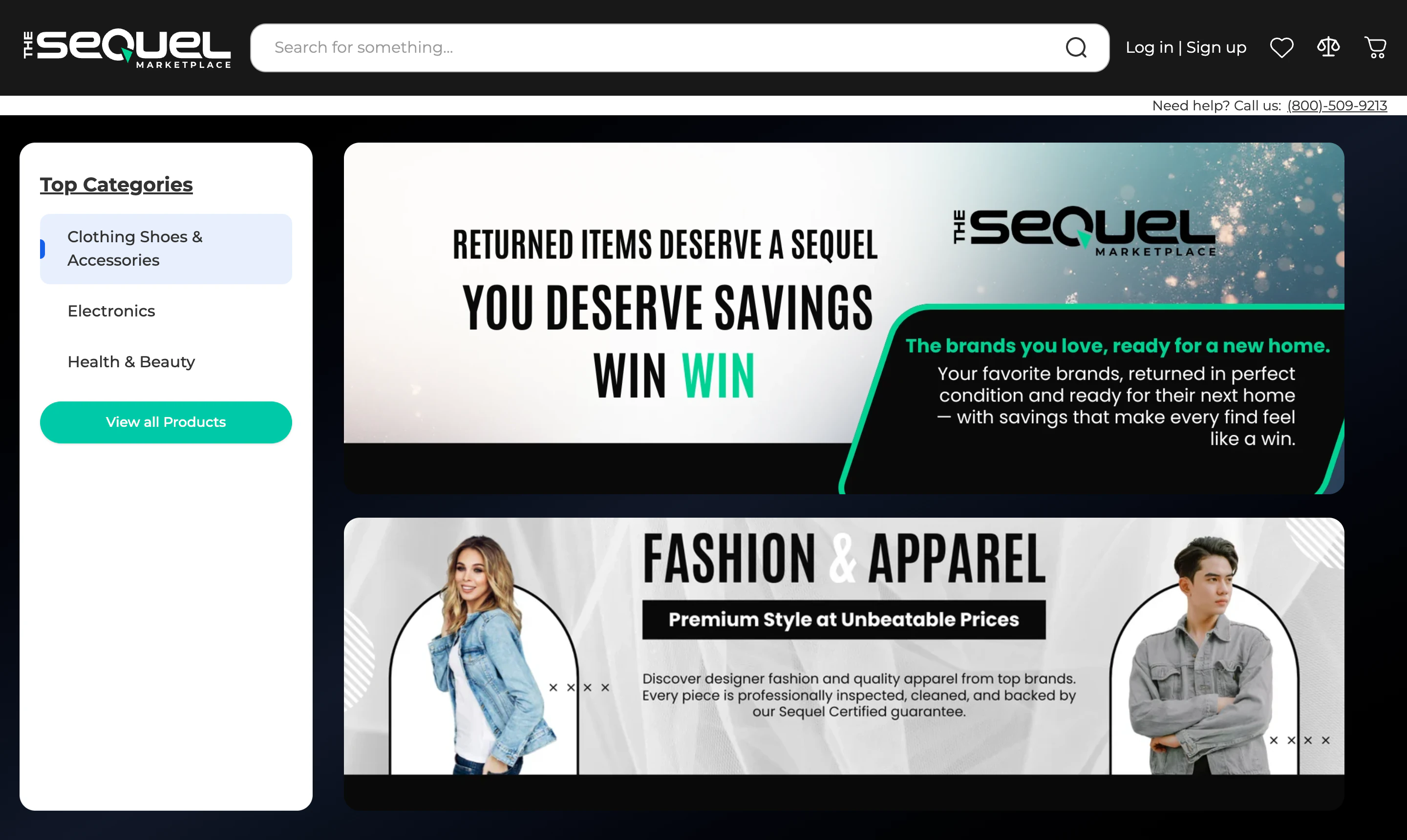
Headless React storefront built on Hydrogen over Shopify’s commerce engine. Condition grading and loyalty points earned on the gap to market price. Category structure designed for a catalogue that turns over daily.
returns marketplace / Shopify Hydrogen
One catalogue serving residential, mobile, commercial and healthcare buyers. Dealer registration and offer requests run alongside consumer checkout. Registration, parts, warranty and manuals keep owners on the site after the sale.
appliance manufacturer / retail and dealerShown with client permission. References and analytics access available during scoping.
Each build reduced to the four systems it actually runs on.
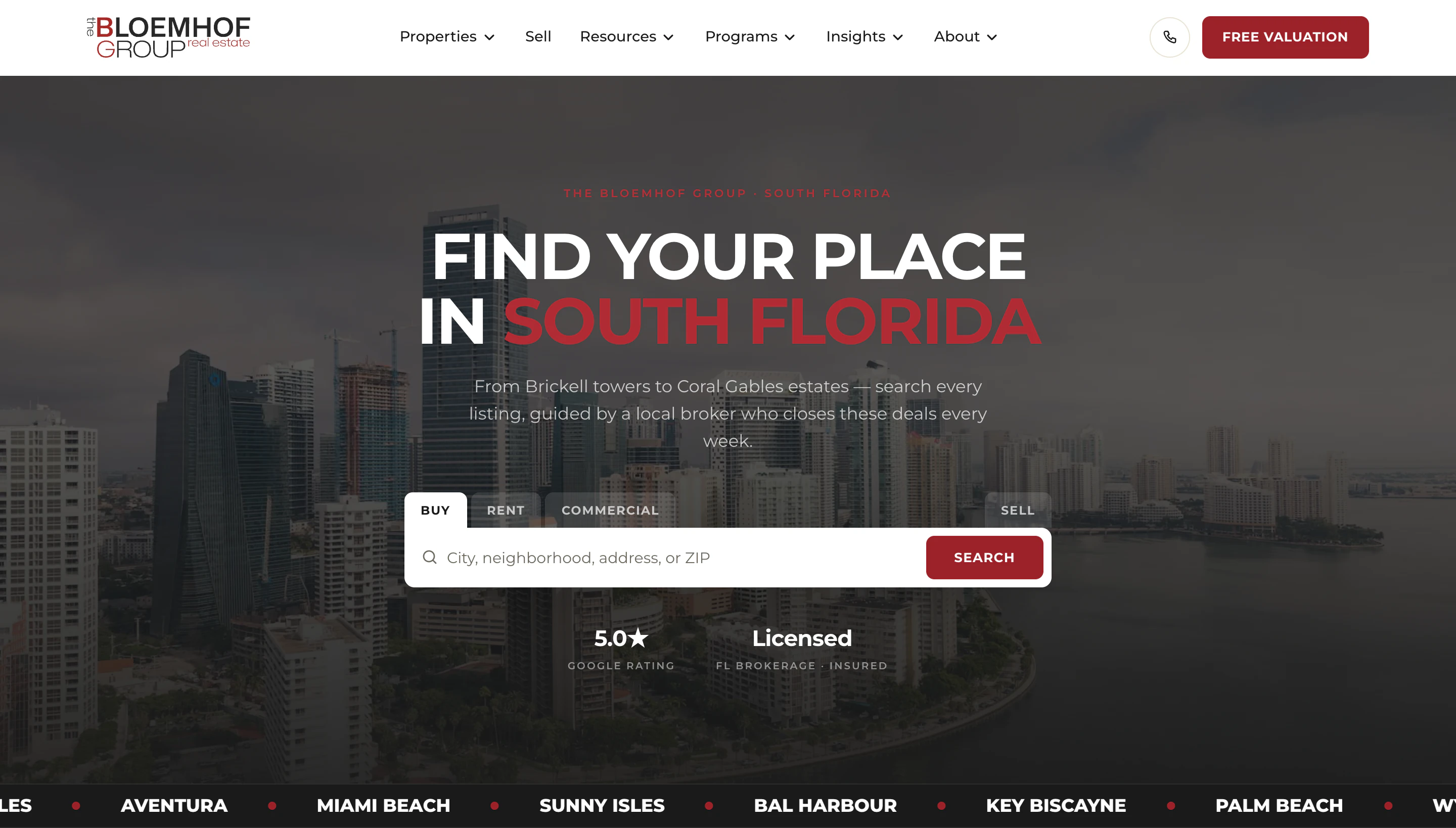
The site opens on the search itself. Two audiences are served on one screen: buyers filter live listings, owners request a valuation.
| System | What it does |
|---|---|
| 01Funnel | Buy, rent and commercial tabs over a live listing feed, with a separate seller path for a free valuation. |
| 02Automation | Every enquiry creates a CRM record and routes to the responsible agent with the listing attached. |
| 03Architecture | Neighbourhood navigation turns one large market into the segments buyers already search by. |
| 04Trust | Ratings, licensing and local proof placed where the decision is made, not on an About page. |
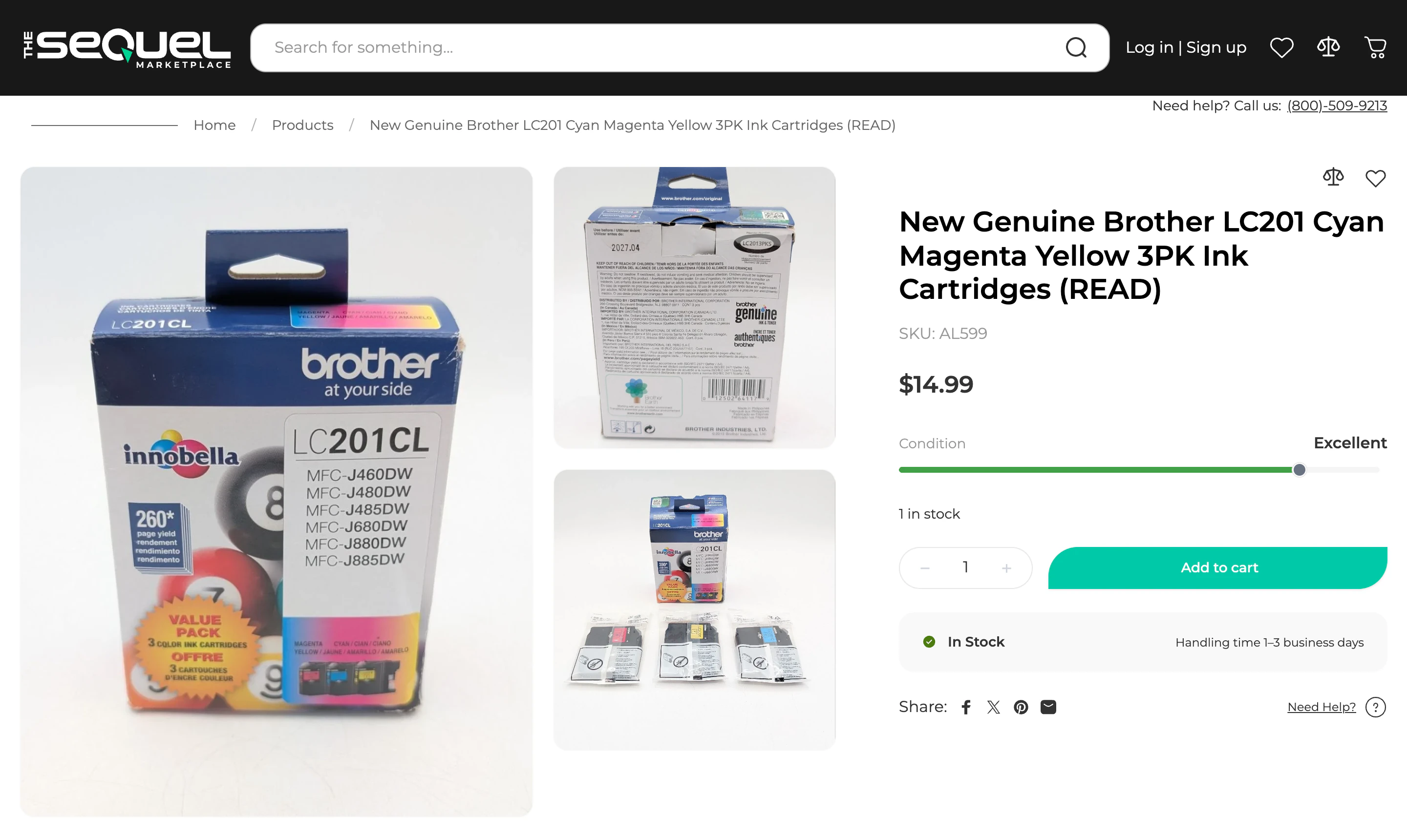
A headless storefront: a custom React front end built on Hydrogen over Shopify’s commerce engine, for a catalogue that changes every day.
| System | What it does |
|---|---|
| 01Commerce | Condition grading and a certification system that let one listing template sell new, open-box and used stock. |
| 02Retention | A loyalty programme that awards points on the gap between the price paid and the market price. |
| 03Merchandising | Newly added and low-stock modules with live countdowns, driven by inventory rather than editors. |
| 04Architecture | Category structure built for constant turnover, so new stock lands in the right place automatically. |
Two audiences, one first screen, no competition between them. When the catalogue changes daily, the structure has to absorb it without an editor.
Discovery is part of every project, not a separate purchase. Where a range is shown, it reflects page count, features and integrations — and the timeline moves with it.
Not required at this scope
Available, $2,500 / month
Available, $2,500 / month
Defined per project
Every quote lists pages, features, content responsibility, revisions, integrations and acceptance criteria. Domains, hosting and paid licences are registered in your name — you own every account from day one, with no dependency on an agency.
Search demand is researched before the sitemap exists, so pages are created for the questions customers actually ask. Billed monthly for the duration of the build, minimum three months, and it converts to an ongoing SEO plan at launch.
Keyword and intent research for your market, mapped into page types.
Intent-to-page map, navigation and internal links that follow how customers search.
Editable titles, descriptions, headings and structured data in every page type.
Crawl access, canonicals, XML sitemap, image handling and speed checks.
Staging blocks removed, URLs validated, redirects mapped from every page that earns traffic.
Most agencies join at step 05. We start at step 01, before a single page exists.
The technical foundation of search is included in every project. Growing rankings, content and authority over time is a separate SEO engagement, which can run in parallel or start after launch.
Each stage ends in an approval. Nothing moves forward until you have signed off what came before, which is what keeps the estimate and the schedule honest.
Sitemap, requirements, stack, phased estimate
Key journeys, page designs, responsive behaviour
Working build on staging with agreed features
Test evidence against the agreed criteria
Rollback readiness, access transferred, training
Timing is confirmed in discovery. The schedule moves for a change request or a delay in client materials; both are recorded in writing.
Search intent and buying questions are mapped to page types before design begins. Every page gets a purpose, a next action and a content model your team can edit.
Example mapping. Your final scope defines page types, content volume, languages and markets.
We design the whole path: a relevant message, reasons to trust you, a step that is easy to take, and a reliable handoff to your team.
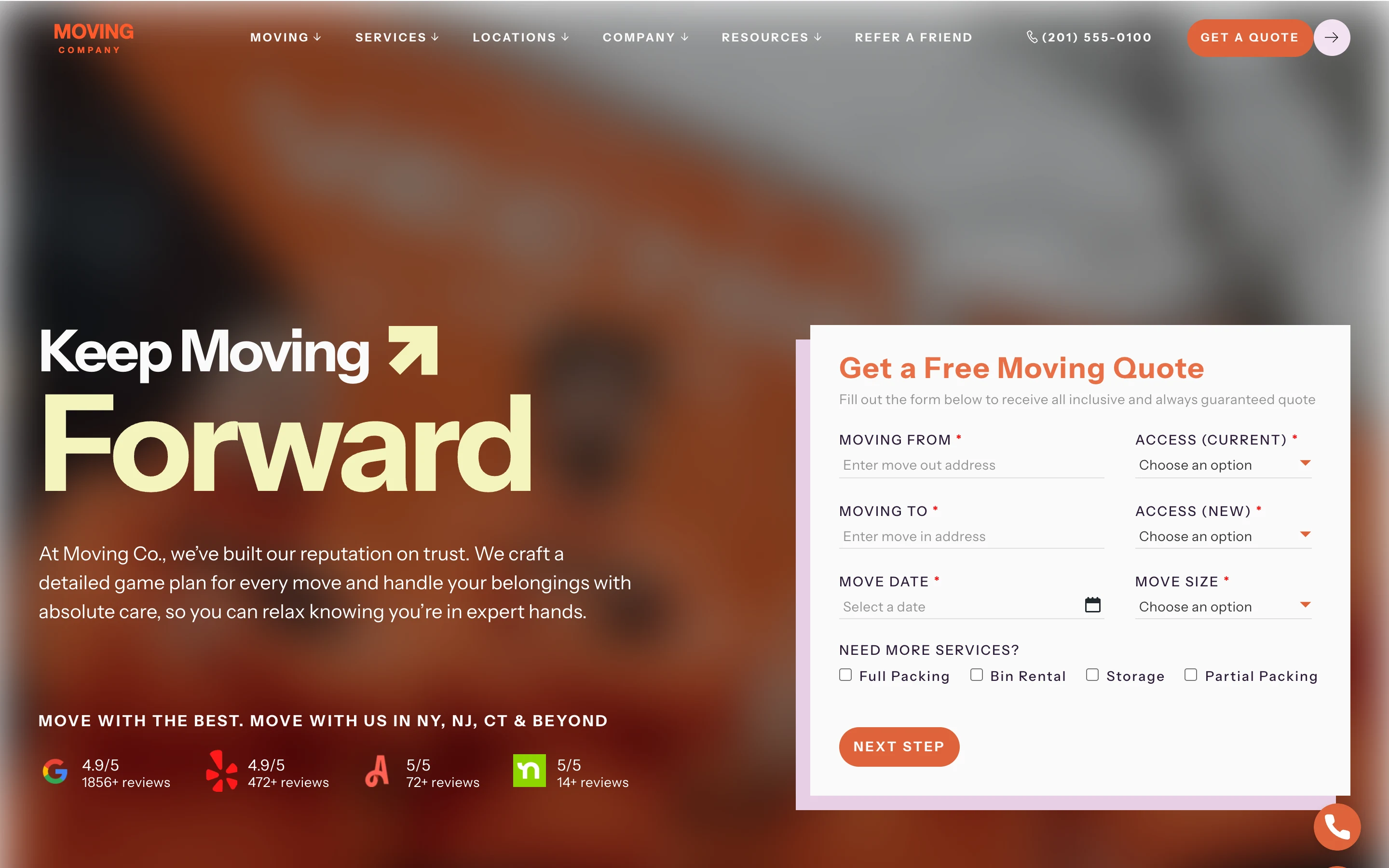
The page answers the promise of the ad, the search result or the referral that brought them.
Specific scope, useful evidence and direct answers to the questions that block a decision.
A successful request creates a CRM record, alerts an owner and confirms the next step to the customer.
Layout, typography, imagery and interaction are developed around your positioning. Wireframes settle the flow first; the design system then covers what happens when content changes, the screen shrinks or something goes wrong.
Dark interface built for a technical buyer, with graphics drawn for this brand alone. Typography and colour carry the positioning before a word is read.

Default, error and success states designed for each step of a multi-stage form. Keyboard paths, focus, labels and contrast checked as part of the build.
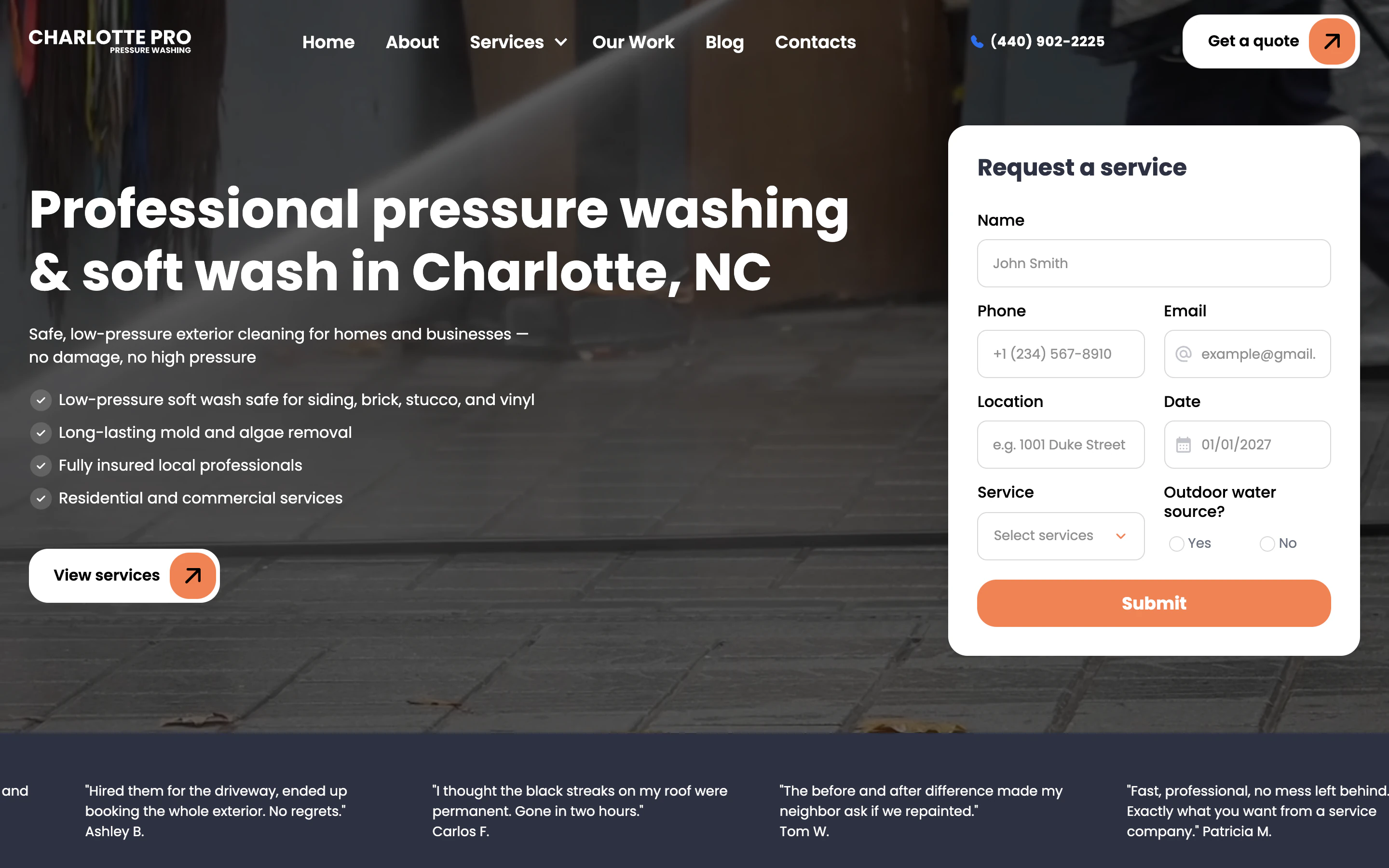
Components designed for desktop, tablet and mobile at the same time. The mobile experience is the full site, not a reduced version of it.
Form clicks and successful submissions are different events. We test the complete journey — including the email that lands in your team’s inbox — before launch.
We define what you need to decide, then specify the events required to decide it — and verify each one fires for the right reason before launch.
generate_lead — request successfully submitted and verified as received by your team, not merely clicked.
add_to_cart — the right item and quantity.
begin_checkout — the purchase journey begins.
purchase — correct transaction ID and value.
Lead and purchase paths are measured separately.
GA4 and Google Tag Manager are the usual choice, subject to the selected stack. Agreed events, duplicate handling and consent behaviour are tested before launch, and no personal details are placed in analytics payloads.
We build the customer-facing journey alongside the operational flow behind it, and connect both to the systems your team already uses.
Catalogue, variants, search and filters. Checkout with shipping, tax and payment setup. Order status, inventory and fulfilment integrations.
Customer portals, partner workspaces and internal dashboards built around real tasks, with permissions enforced on the server, not hidden in the interface.
CRM, CMS, payments, ERP and marketing APIs. We map the source of truth for each record, then handle duplicate webhooks, failed syncs and retries.
Catalogue volume, payment providers, subscriptions, user roles, data retention and integration scope are defined in the project specification, because they determine the platform, the hosting and the long-term maintenance plan.
Established platforms and custom code. The choice follows your workflows, editing needs, integrations and ownership preferences — not our convenience.
Marketing sites with CMS, fast launch, editing without a developer.
Content-rich sites, blogs and commerce on the WP ecosystem.
Standard and headless commerce, payments, logistics, loyalty.
Custom front ends, portals, dashboards and applications.
Process automation, integrations and AI-powered business tools.
Runs OnAWS · Vercel · Docker · Kubernetes · GitHub Actions · CI/CD · Jest · Playwright · Sentry — with automated testing and error monitoring on every build. Custom design is the default on every stack.
CTO at Point Higher · Senior Full-Stack Developer · 7+ years

Nick leads the technical direction at Point Higher and owns solution architecture, technology selection, development standards, infrastructure, security and the delivery process end to end. He is hands-on across the full lifecycle — discovery, architecture, front end, back end, integrations, deployment and monitoring. His work covers high-performance websites, web applications, customer portals, analytics dashboards, CRM integrations, workflow automation and AI-powered business tools — built with a product mindset that balances speed to launch against maintainability, security and performance.
| Specialism | Tools |
|---|---|
| Frontend | TypeScript · JavaScript · React · Next.js · HTML · CSS · Tailwind |
| Backend | Node.js · NestJS · Python · FastAPI · REST · GraphQL · WebSockets |
| Data | PostgreSQL · MongoDB · Redis · Prisma · Elasticsearch |
| Infra & QA | AWS · Vercel · Docker · Kubernetes · GitHub Actions · Jest · Playwright · Sentry |
| AI | OpenAI API · AI agents · RAG systems · vector databases · CRM and payment integrations |
Technology should support the business, not complicate it.
Acceptance criteria are agreed before development starts and verified on staging. The launch checklist covers the public site and any private application areas.
Forms reach the right owner. Purchases, logins and key workflows complete from end to end.
✓VerifiedAgreed browsers and devices, keyboard paths, labels, focus and contrast.
✓VerifiedPage performance, index settings and migration redirects verified before launch.
✓VerifiedAccess rules, input validation, dependency checks and a tested recovery plan.
✓VerifiedAgreed events fire correctly, editors can update content and you hold every account.
✓VerifiedAcceptance criteria are agreed before development starts and verified on staging. The launch checklist covers the public site and any private application areas.
We fix those free of charge, with no limit on the number of fixes. New functionality and requests beyond the specification are handled as change requests, with a cost and timing estimate before work begins.
Tell us what you need to sell, explain or automate. We come back with a scope, a fixed price inside the range above and a delivery date.
What you need to make possible
Where you are starting
What it needs to do, and when